
For a time I worked for a title insurance company, and a big part of it involved combing through court documents, documents on who owned what and how much was owed, real property better known as land.
Not the most exciting job. Upon his impending retirement as Chief Title Examiner for Hennepin County, MN, Ed Bock told the Star Tribune Newspaper that his job was “… as boring as watching molasses slide downhill.”
Thomas Cromwell held a similar opinion when he complained to his wife in the TV Series Wolf Hall:
I don’t want to spend my life dealing in conveyances, Liz – where this man’s fence should be here or here.
No, Cromwell wanted to use his expertise as a lawyer to work for a megalomaniac who would eventually have him killed. Yes, a beheading at the hands of King Henry VIII would be a far better fate than spending days poring over musty real estate documents.
For me it wasn’t that bad. It was a job that provided a small sense of history, especially one day when looking through an Abstract of Title an Attorney’s Opinion fell into my lap.
TUTORIAL
Abstract of Title: a certified list of recorded documents on a parcel of land.
Attorney’s Opinion: What Thomas Cromwell would have issued after researching an Abstract of Title if he had not pursued a more dramatic line of work.
The Attorney’s Opinion that fell into my lap was issued in May of 1936. It was two pages and quite brief. The attorney stated the property was properly held, had no encumbrances, and then the attorney wrote this:
You must, of course, be ever aware of a certain stipulation in the warranty deed by virtue of which your immediate grantor acquired title to the property involved herein. This stipulation provides the property involved “shall not at any time be conveyed, mortgaged, or leased to any person or persons of Chinese, Japanese, Moorish, Turkish, Negroe, Mongolian, or African blood or descent.”
Everything inside me stood up. This was not boring. This was history, the kind pushed to the margins with red lines, rejected loans and the concentration of minorities into less appealing parts of the city, the parts to be torn asunder when President Dwight D. Eisenhower signed the Federal Highway Act of 1956.
You must, of course, be ever aware…
*****
Outrage! That was the reaction to George Floyd’s murder. And what happened was beyond the pale. Even Officer Chauvin knew what he had done. He even tried to negotiate a plea agreement on the night of his arrest, but no one was going to touch the offer with rioting in the streets.
Many see what happened to George Floyd as a tragedy, but don’t understand the riots as the appropriate response. What they might not know is the two have always been linked, as Jelani Cobb from the Columbia School of Journalism said in the documentary 13th:
If you were to look at the large-scale riots that we know of in, you know, our recent history, from Rodney King to the Detroit Riot in 1967, the Newark Riot in 1967, Harlem Riot in 1964, Watts in 1965. Every single one of those riots was a result of police brutality.
Go back even further to the scene in 12 Years a Slave after Solomon Northup was forced to whip one of his fellow slaves. He is seen quietly sitting next to a river in the tall grass, the evening sun casting a pastoral glow.
Before his abduction, Solomon worked as a musician playing the violin to support his family. Even in slavery he is given the instrument to play for his masters and at times allowed to earn a little money playing for others hosting formal balls. But at that moment on the banks of the river the violin in his lap is broken into pieces, crushed by his own hands, a love, a livelihood destroyed for he needed somewhere to put the rage.
*****
Land, you ask any person the best way to accumulate wealth, most, if not all, will say buy a house and make it your home, a refuge, and investment, an avenue to achieve the American dream.
In 2013 the state with the highest rate of home ownership was Minnesota at 73%.
In that same report the rate of U.S. born Black homeowners in Minnesota was 26%.
Another avenue to the American Dream: taking out a small business loan and opening a restaurant or store.
A lot of these businesses can be found on Lake Street, a street like no other in Minneapolis for it runs uninterrupted from the banks of the Mississippi River all the way to the neighboring suburb of St. Louis Park, a commercial corridor over six miles long.
It was this corridor that took the brunt of the rioting after George Floyd’s murder. Some businesses lost everything when their buildings went up in flames. Businesses like:
- Addis Abada
- Chicago Furniture Warehouse
- Fatima African hair Braiding
- La Raza
- Paraiso Lounge
The nightclub El Nuevo Rodeo is also on Lake Street. Ironically, it hired George Floyd and Officer Chauvin to work security before the Pandemic. It also went up in flames.
Then there is Gandhi Mahal, a restaurant across the street from the Minneapolis Police 3rd Precinct, a location too close to the gathering sea of protesters. But even though his love and his livelihood went up in flames, the owner, Ruhel Islam, who had probably experienced his share of prejudice, said to a family friend during a phone call: “Let my building burn.”
*****
A few weeks after the riots I was taking a morning walk when I saw a truck pulling a commercial-grade BBQ grill. It drove past, turned into a parking lot and gently eased between a sand-filled playground and low-slung park building before driving onto an open field that held four baseball diamonds arranged like quadrants in a square.
Food trucks arrived, then a delivery truck to deposit tables, tents and a raised platform.
I stood at the window and watched the assembly.
Why hold a summer festival in the middle of a pandemic? Why celebrate anything on the heels of George Floyd’s murder? Who would come?
Most stayed home. The few that arrived drove right onto the baseball diamonds, moving from booth to booth like a festival was a full-service drive-through of community information, city agency connections, spare ribs, roasted corn, arts and crafts and center stage, a DJ on the raised platform playing music for the attendees who had access to their own car radios. No matter, he played his music for everyone in the park and for anyone within a five-mile radius.
I set Pride and Prejudice aside for the music was astounding. Hip Hop beats pounded out of speakers, rolled across the park and into my front window to rattle anything that wasn’t nailed, fastened or glued.
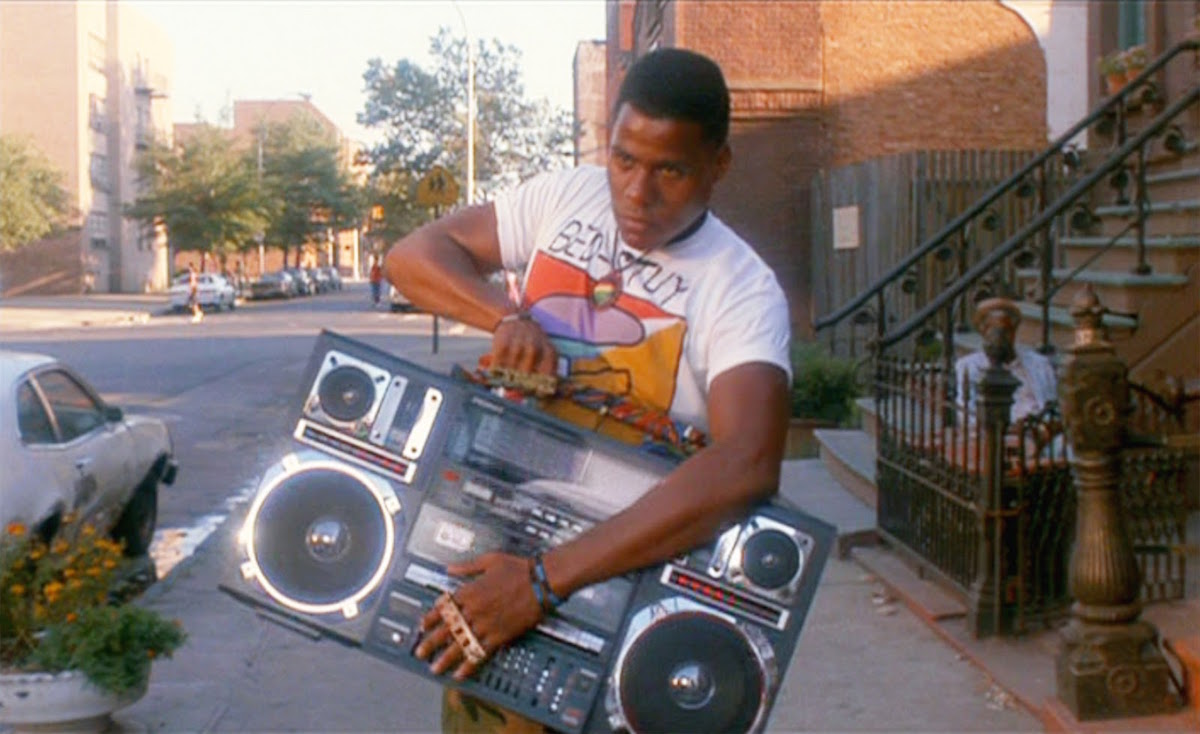
I stood overwhelmed by the sheer power of the moment. Even if I had a walk-in freezer, even if I walked into the cooler with as much winter clothing as my frame could hold and pulled the stainless steel door behind me, surely the vibrations would still reach me like Radio Raheem’s boom box blasting through his Bed-Stuy neighborhood, letting everyone know that he was the new town crier like Zora Neale Hurston’s essay “How It Feels To Be Colored:
This orchestra grows rambunctious, rears on its hind legs and attacks the tonal veil with primitive fury… I dance wildly inside myself; I yell within, I whoop; I shake my assegai above my head… My pulse is throbbing like a war drum. I want to slaughter something – give pain, give death to what, I do not know.
One day I went through some old boxes, which seemed an appropriate activity in the middle of a pandemic. And as I sorted through Christmas cards, vacation pictures and magazine clippings, I came across a copy of the Attorney’s Opinion that fell in my lap many years before. I kept a copy as a reminder and upon review I was surprised, not by the stipulations, but by the address. The parcel of land was not in one of the more prized parts of the city. It was only three blocks from the precinct where Chauvin worked, the station that incurred a city’s wrath and sparked protests all around the world.
 fornaught.net