
DANNEMORA
Nearly halfway through the seven-part mini-series I could not help ask, “When are they going to get to the escape?”
Perhaps, it was more difficult than I thought. So why call it Escape at Dannemora? Like it was happening, which it wasn’t.
GREAT
“What’s so great about that,” Wendy asked after we finished watching the World War II film.
It was a legitimate question. We had invested over three hours in the planning, implementation and…
The Great Escape… Is that really the right title?
MOUTHFUL
Maybe the best way to make an escape movie is not to reveal it until the end. That’s what director Frank Darabont did with a Steven King story. But why obscure the plot with an opaque title?
Nobody went to see The Shawshank Redemption because nobody knew what it was about. When it was shipped overseas some countries changed the title in hopes of filling the seats:
THE WINGS OF FREEDOM – ITALY
WALLS OF HOPE – ISRAEL
1995: FANTASTIC – TAIWAN
LUKE
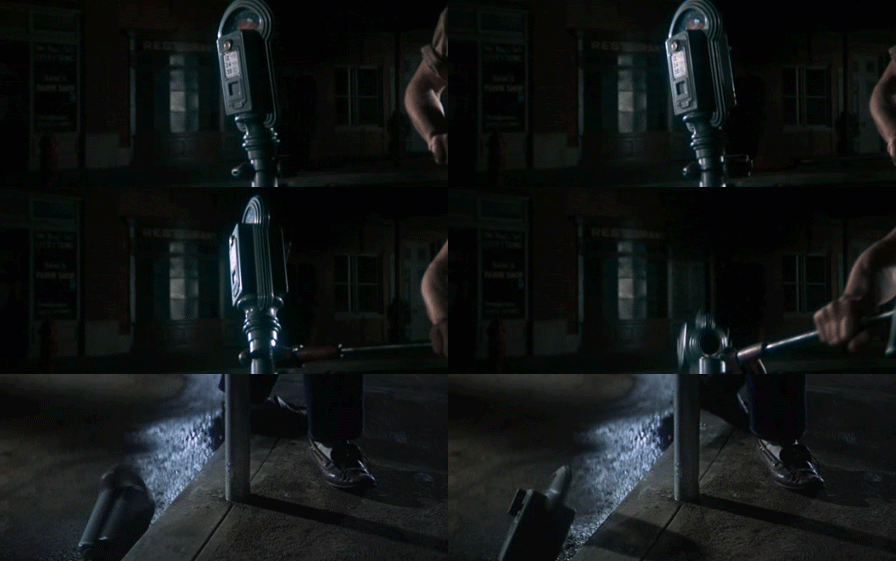
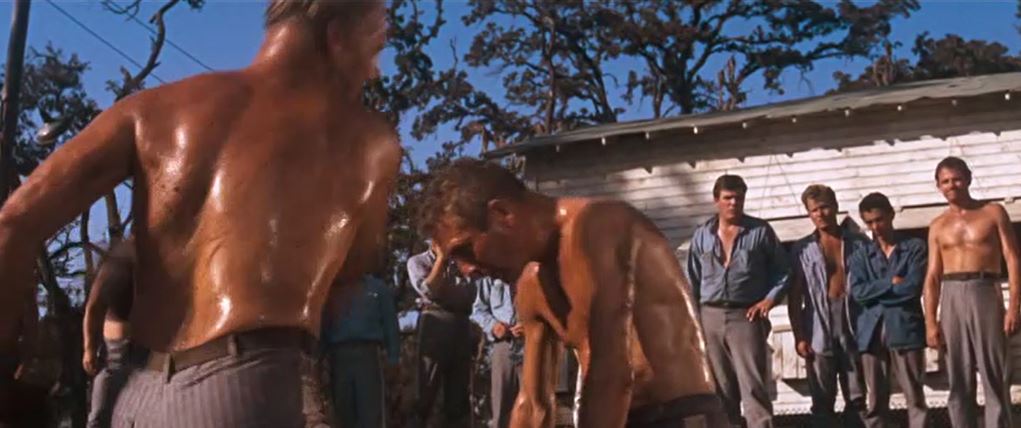
If I had to pick a favorite Paul Newman role, Luke Jackson would get the nod. After all, Luke starts the movie by removing the heads off of parking meters with a pipe cutter. Who does that? It may be the most inane display of civil disobedience recorded on film. But Luke was never one to make much sense.
FRANK
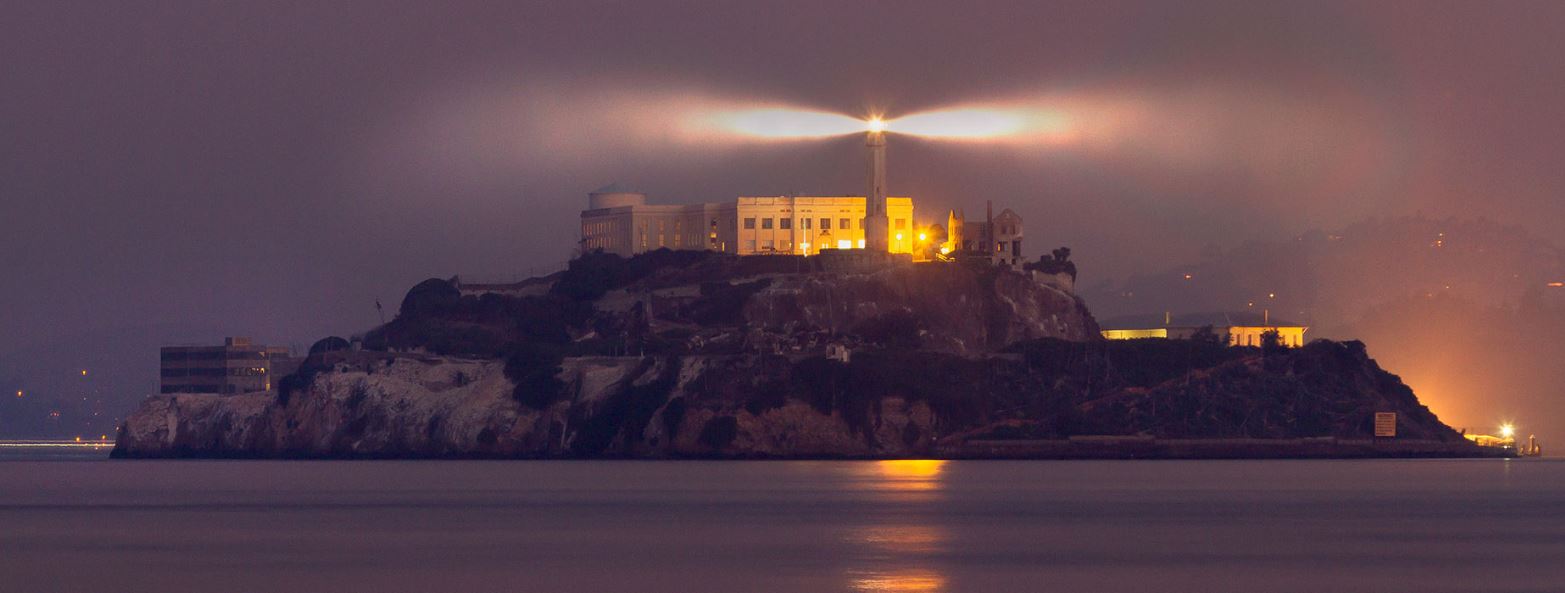
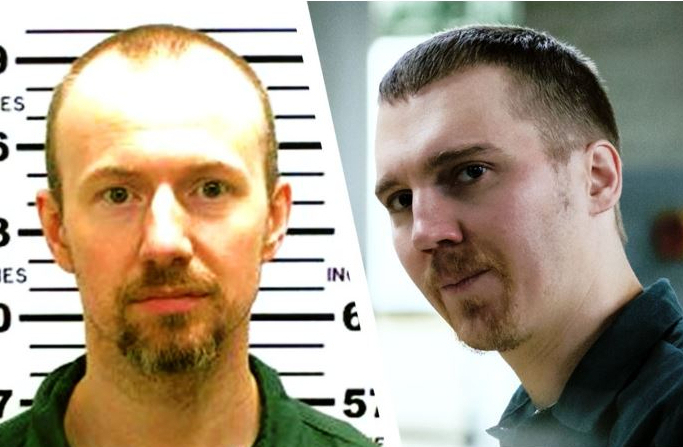
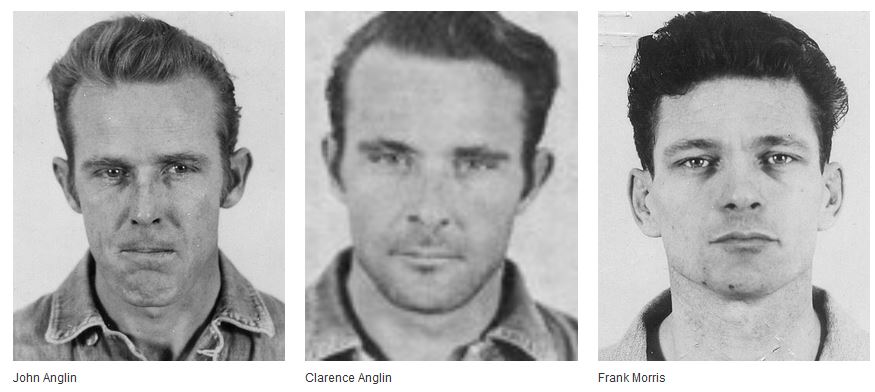
Frank Morris was what you would call a repeat offender, a felon who couldn’t envision a life that didn’t involve larceny. Shuffling in and out of the jails in Florida, Georgia with a successful escape in Louisiana, he was finally sent to a rusty cage on a pile of rocks in the middle of the San Francisco Bay. He was there to serve a fourteen-year sentence for armed robbery, but he had no intention of staying that long.
INTRO
Some of the above stories are pure fiction (Cool Hand Luke and The Shawshank Redemption), some are true (The Great Escape and Escape at Dannemora), while one remains shrouded in mystery (Escape from Alcatraz).
So how did they do it, escape, especially with so many obstacles?
LOCALE & GUARDS
Rock, if you want to keep someone confined eternally, surround them with stone. No hacksaw or cutlery will do any damage and good luck getting a jackhammer past the guards.
The castle-like stone prison of Shawshank is introduced in a sweeping aerial shot. A drive along the actual Clinton Correctional facility in Dannemora, NY, reveals an endless, impervious wall showing no visible entrance. The makeshift prisoner of war Camp outside of Zagon, Poland wasn’t nearly as imposing. One could see it as a campground if it wasn’t for the barbed wire, attack dogs, searchlights and guards.
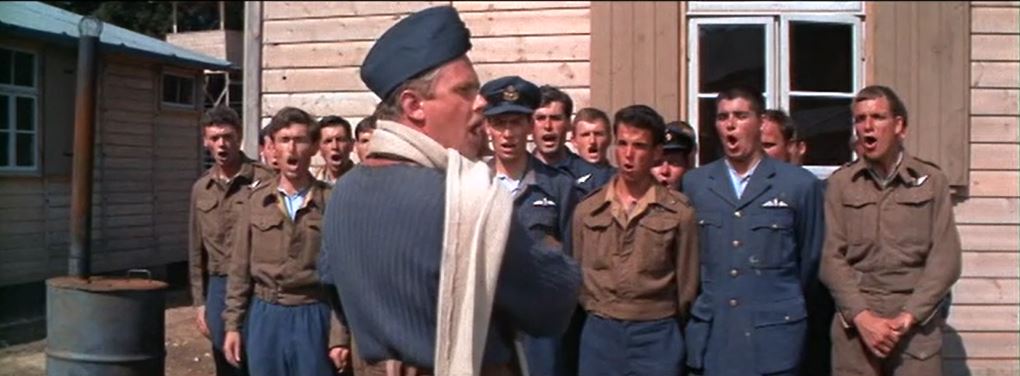
The German air force was in charge of the allied prisoners and the Luftwaffe Commander, Herman Goering, adhered to military etiquette, which meant he knew it was the duty of the POWs to break out and it was his responsibility to keep them in.
At first it was all a game as POWs hid in trucks switched clothes with foreign workers, the craftier ones stealing German uniforms and walking right out the front gate. Twenty-three POW’s tried to escape during the first days of confinement and the German guards rounded them up and put them back in their pen. Like Alcatraz, Stalag Luft III was specially built to house the worst of the worst, the ones who perpetually tried to escape.
“Alcatraz was built to keep all the rotten eggs in one basket.”
Warden Dollison
“We have, in effect, put all our rotten eggs in one basket.”
Kommandant Von Luger
WORK & PLAY
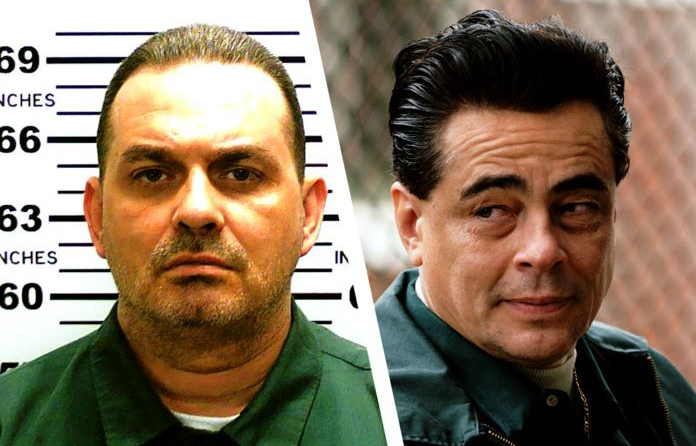
Perhaps the best way to keep someone in prison is to keep them busy. Richard Matt and David Sweat spent their days at Clinton Correctional Facility sewing uniforms. Luke maintained endless miles of county roads. Andy used his knowledge as an ex-banker to file taxes for the guards and to cook the books for the warden.
But even the most overworked prisoner still found time for recreational activity. Frank played an accordion in a prison band. The Ally POWs formed a choral group. Richard taught David how to paint, while Andy carved courtyard stones into chess pieces. And Luke being Luke decided one night while strumming a banjo that he could eat 50 eggs. Why not? What could possibly go wrong eating over four dozen eggs?
You would think all work and play would keep Jack busy, but the occupied still looked for angles to escape. Richard and David seduced their female boss, Tilly Mitchell, to turn her towards their favor. Andy used the corrupt nature of the warden to his own advantage. And when Frank played the accordion and the POWs sang, they weren’t so much concerned about the quality of the music as covering up what was really going on.
TOOLS & NICKNAMES
Frank noticed the damp salty air at Alcatraz made conditions of the facility a deteriorating mess. So he swiped some cutlery in the mess hall and went to work on the mortar around the ventilation grate in his cell.
Richard and David weren’t as lucky in the dry Adirondack Mountains. So they convinced their boss that they needed an industrial hacksaw to help cut the wooden frames for their paintings. (It never hurts to ask.)
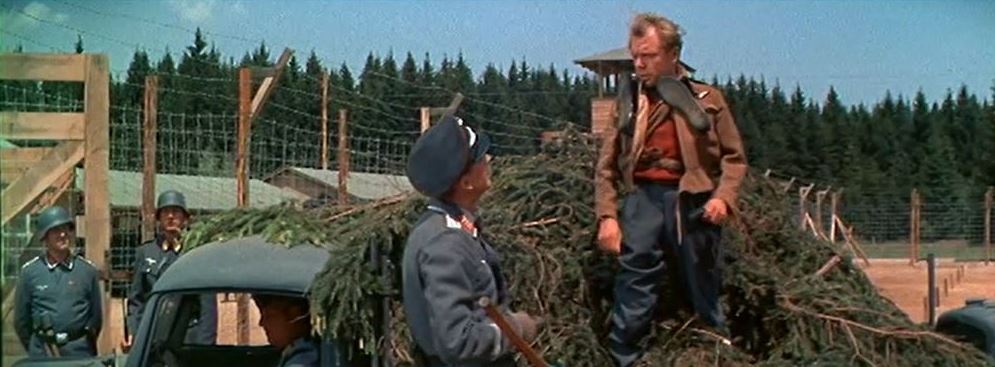
But these were small-scale operations compared to the wholesale enterprise of hundreds of POWs assigned tasks and newly minted nicknames. Their leader, Roger Bushell, went by Mr. X. Then there were men named for their assignments: Scrounger, Tunneler, Forger, Manufacturer, Dispersal and Intelligence. Then there was Hilts. He was assigned reconnaissance. Mr. X wanted him to sneak under the wire, not to escape, but to get the lay of the land. He wanted Hilts to flee only to return, which meant getting caught and spending time in solitary confinement.
Hilts spent so much time in a small cell he became known as The Cooler King, and with a wry smile, baseball and glove, he seemed game, but not all prisoners weather such conditions with such gung-ho spirit.
PATIENCE & SOLITUDE
In theory escapes shouldn’t make good stories because they take forever to mount.
Even running a 24/7 operation, Mr. X believed it would take close to a year to dig the tunnels. Richard and David kept me waiting through the seven-part miniseries because it takes an inordinate amount of time to cut through cement and steel with one hacksaw. Andy’s preparations took decades and led to setbacks that landed him in solitary confinement, once for protection, once for punishment, then finally as a threat from the warden.
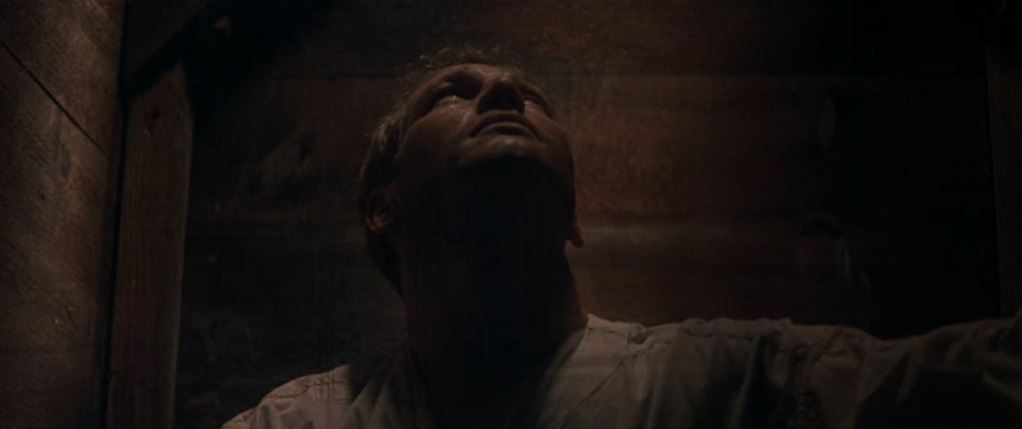
One night Luke received news his mother passed away. The warden consoled Luke by placing him in “the box” for he didn’t want Luke to get “rabbit blood” and bolt for the funeral. So Luke was placed in a wooden outhouse with barely enough room to breathe.
With no windows and little ventilation, Luke’s new internment was the closest accommodation to Hell and it would forever change his relationship with the prison camp and society as a whole.
HIGHLAND
Never in his life did my dad like to sit still. For work he was on the road at different survey sites. In his free time, he liked to be out, always in his car until it was no longer safe for him to drive. So my parents sold their house and moved to a quiet neighborhood in St. Paul, MN on a block that sat on a bluff overlooking the Mississippi River.
Dad still wandered, but now on foot. The first month he would get lost and rely on the kindness of strangers to guide him back. Then he started to figure out the terrain, but by then walking became problematic. Always fainting, always falling, he wasn’t getting enough oxygen due to a faulty heart valve. It needed repair, and during a procedure to map out his heart, he had an adverse reaction to the anesthesia; then two weeks in the hospital followed by a rehab facility.
The setback landed Dad in a wheelchair for he needed to be in a wheelchair, even though he didn’t think he needed to be. So one day he stood up, shaky, wobbly…
I told him he should probably remain seated.
A burst of anger shot through his frail body. “I hate this F-ing wheelchair!”
He tried to kick it.
I was close enough to catch him, horrified, yet outwardly laughing. Like Luke he had no intention of following the rules.
ORIENTATION
The first time I saw Cool Hand Luke was at an overnight freshman retreat. It was more of an orientation, a chance to introduce us to the new school. We would be given a tour of the campus, shown our schedules, meet our new classmates, but first a movie in the auditorium.
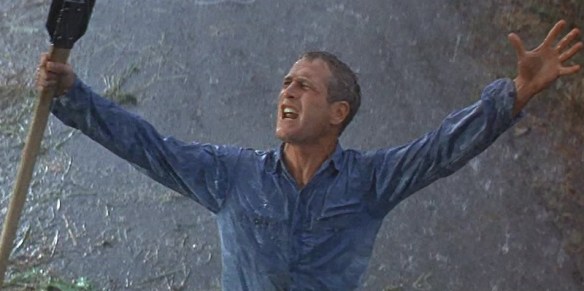
At the time I didn’t appreciate the irony of watching an anti-authority film within the confines of a Catholic setting. What were the instructors hoping we would take from the movie? Sure, there were religious parallels between Luke and Jesus. (In one scene Luke stands out in the rain with a sickle in his hand, pleading to God not to foresake him.) But Jesus produced loaves of bread while Luke took money from his fellow prisoners through bluffs of poker. Jesus healed the sick while Luke walked into the heavy fists of fellow prisoner Dragline. Jesus escaped death on the cross while Luke kept failing in his attempts to flee. What was the point? Was the school to be our new prison? Was the cafeteria only going to serve hard-boiled eggs? Were we being told it was futile to try to escape?
CLIMB OR DIG
Most escape routes involve two options: going under or over an obstacle.
Once he carved his way out of his cell, Frank teamed up with the Anglin Brothers to create a workshop in a little used area of the prison. From there they would make life jackets, paddles and one 6’ X 14’ rubber raft made from fifty pilfered raincoats.
It was their intention to pop through a rooftop vent, scale down a prison wall and slip their homemade watercraft into the bay. And one night on June 11, 1962 they did just that.
Once they carved through their ventilation grates with a worn hacksaw, Richard and David moved into the inner bowels of the Clinton Correctional Facility. And after days of wandering through a maze of locked doors and dead ends, they located an idle steam pipe connected to a nearby power plant. A possible escape route? All they needed was another hacksaw.
With the understanding that the Germans were watching their every move, Mr. X decided to simultaneously dig three separate tunnels named Tom, George and Harry, knowing full well at least one of the tunnels would be discovered by the guards.
Luke… Well he had no time for such elaborate planning. The day he was let out of solitary confinement was the night he sawed through the floorboards near his cot and slipped over the wire.
Dad did get out of the wheelchair. He even went back to where he lived on the bluff, but this time on a secured floor, a memory unit, but Dad’s memory wasn’t the problem. It was his failing body and his stubborn attitude. Like Luke he didn’t take kindly to instruction.
FLEE AND RETURN
The first night Dad moved into his new room he removed the window screen to find the frame only raised a half foot. The next day he started hanging out in the main room, watching the staff move in and out of the secured door much like the stooges aka lookouts in The Great Escape.
At first it was all a game: Dad dashing through the open door, only to be redirected by the staff, only to make another attempt.
One day I arrived to take him to the dentist. I went into the memory unit but nobody was there. I went to the front desk and was told everyone was at the ice cream social.
When I reached the community room, I scanned the crowded floor. There were so many people, and I could not locate him. I saw the head nurse of the facility and asked if she had seen my dad.
She looked perplexed. “I brought him, why?”
Immediately we both knew. She told me she had fifteen minutes to find him before being required to call the police. So I dashed out the nearest door and ran around the campus.
With no fence or wall to stop him, he was nowhere to be found.
To cover the bases I dashed back into the complex and covered four flights in two buildings. The only other person I saw was the head nurse. Everyone else was at the ice cream social and Dad was where?
We went back outside. The fifteen minutes were up and she needed to make the call. But before she pulled out her phone, we saw Dad being marched up the hill.
A staff member was done for the day and and driving home when she saw Dad on the path along the Mississippi. I asked Dad where he was going. He told me he was heading to the dentist. I told him he was going in the wrong direction, but that wasn’t the point. For a brief moment he was outside the wire…
 fornaught.net