
DESTINATION
I listened to the directions on my smartphone, a calm voice leading me out of the city over the Mississippi River through suburb to exurb, moving past grassy fields and oil refineries, driving along with fuel tankers and cement trucks past dusty gravel pits, green golf courses until I reach the outskirts of a small town where I turn left, then right, then straight until I run out of road.
Across the street are two settings.
To the left: a green pasture with a slatted, white fence, corralling horses.
To the right: a cemetery with an iron-wrought fence, interring those who finally found peace.
That’s the thing about escaping. Where do you go?
Luke kept going over the wire, but really never knew what to do next.
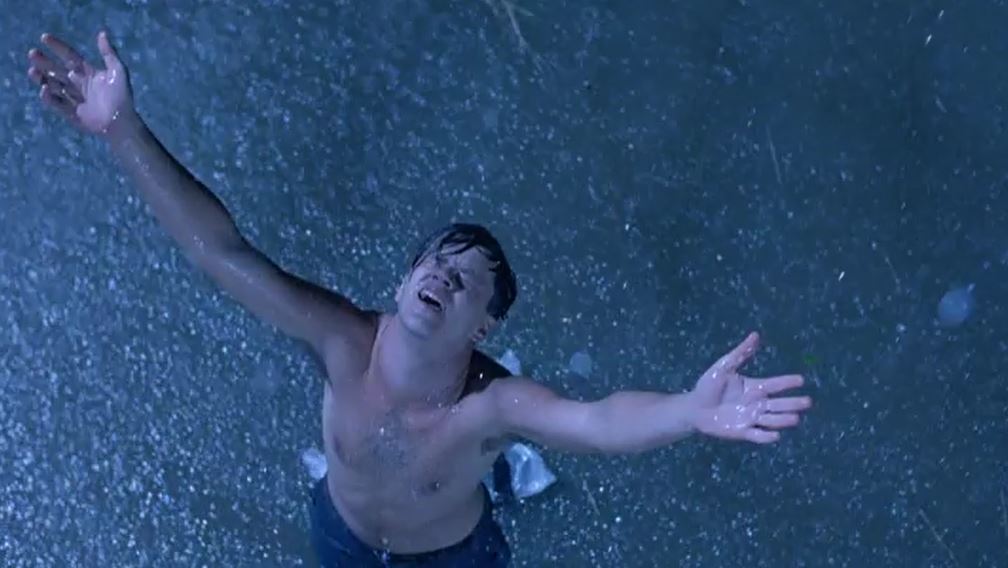
Andy at least had a plan. Once he escaped he was going to gather the ill-gotten gains he helped launder for the warden and head to Mexico.
That was Richard and David’s plan as well. Once they crawled through the idle steam pipe and popped open the manhole cover in the middle of Cook Street, they were going to jump into the waiting car driven by Tilly. Then off to Virginia to lay low with friends before moving onto Mexico.
One problem. Tilly got cold feet and decided to stay home.
After losing Tom and George to German guards, the POWs finally completed Harry. Hundreds of men with civilian outfits, papers, documents and train schedules were ready to flee in all directions: north to Sweden, south to Switzerland, and west to Paris.
“Tonight’s the night,” announced Mr. X to his men. “Get cracking!”
It was going to be a world-class breakout. Harry was going to lead them under the wire, the fence, the outer fence and into the woods.
One problem. When they punched through the soft grass and looked around, they noticed the tunnel ten feet short of the trees.
If only they had someone to double-check their measurements. Dad would have been a perfect fit with his gift for gab, eternal desire to be outside the wire and a skill that would have granted him a new nickname – Surveyor.
Dad’s attempts to escape didn’t stop at the ice cream social. Dad kept sneaking out the main door until the staff kept a better eye on him. He then discovered the locked door had a feature which released if the person kept pressing the panic bar. Then one afternoon he was caught in the enclosed courtyard standing on a chair propped along the wrought iron fence with one leg reaching for the spiky railheads.
It was the final straw. Dad was a danger to himself and incapable of staying put. So an even more secure unit was found. All I had to do was take a left at this intersection to a small hospital only a few blocks away. I remained, though, looking at the horses. I couldn’t help thinking how claustrophobic it would be to take an animal that only knew wide open spaces and putting it in a stall.
THE GOOD AND THE BAD
In the sixth episode of Escape at Dannemora, the director, Ben Stiller, made an interesting detour. Instead of going full steam with the escape, he flashed back to the events that landed Richard and David in prison.
Richard was given a life sentence for the murder of his boss in a botched robbery attempt.
David shot and killed a sheriff’s deputy when the deputy came across his illegal weapons’ sale.
Frank Morris was a hardened criminal by the time he was sentenced to fourteen years at Alcatraz. He did have a difficult life. Both of his parents abandoned him as a child. Moving in and out of foster homes didn’t help. He did have an IQ of 139 which put him in the top 2% of the population. Given different circumstances, he could have been a CEO of a Fortune 500 company quietly stashing away millions of dollars in an offshore account. Instead, he used his mind to find a creative way to break out of a prison which so far had kept every prisoner in.
Then there’s Luke, not a bad guy, only serving two years for removing the heads off of parking meters, which is a pretty good joke but a terrible reason to be incarcerated.
Andy and the Allies were the only innocent members of the group. But here’s the thing. I still can’t help but root for all their escapes.
REALITY
The reason my cousin, Wendy, and I were disappointed with The Great Escape had to do with our expectations. Already, we had seen Andy make it to freedom and Richard Kimble elude federal marshals in The Fugitive. Sure, protagonists go through trials and tribulations, but in the final act are they not rewarded?
But not every escape ends up in Mexico.
Daily visits to see Dad were limited to a couple of hours.
With no getaway car, Richard and David were forced to slip out of the sleepy town of Dannemora for they had no Plan B.
After his escape, Luke was captured and put back in the outhouse.
Mr. X wanted all 600 POWs to go through the tunnel. He worked out a plan for 220. With Harry ten feet short of the trees only 76 were able to flee.
Even though Dad was back in a wheelchair, his body would not sit still.
Five hundred officers from an alphabet soup of local, state and federal agencies blanketed a small corner of New York for no prisoner should ever break out of a maximum security facility.
Back on the chain gang Luke convinced a guard he was shaking a branch while relieving himself behind a bush. But with the help of some string he was already back on the run.
Adolph Hitler was furious that 76 POWs were on the loose and relieved Kommandant Von Luger of his command, putting the Gestapo in charge.
As Dad kept wriggling out of his seat, I kept hoisting him back into the wheelchair.
Richard had a hard time keeping up with the younger David in the mountainous terrain and started drinking after finding alcohol in an unoccupied cabin.
Luke was again captured and returned to a warden who was determined to break his spirit.
Hitler wanted all of the escapees rounded up and executed. He was told it would be a sure fire way to get German POWs killed. So he compromised.
Dad’s deteriorating health shocked me. He moved like a puppet being manipulated by some unseen hand.
Tired of running, Richard mounted a final defense with a stolen rifle, but was killed by a border agent just outside of Malone, NY.
Luke’s third escape involved stealing one of the guards’ trucks with Dragline by his side.
Seventy-six POWs may have been outside the wire, but they were still behind enemy lines with 70,000 policemen now looking for them.
The medication used to sedate him made Dad’s slurred speech difficult to understand.
Now alone, David made a final push for Canada.
In the dead of night Luke ditched the truck in a small town and parted ways with Dragline.
German police quickly started rounding up POWs with civilian clothing, forged documents, faulty German and an unrealistic wish to blend in.
There was no road map in helping Dad at this point. No calm voice telling me what to do.
A state trooper put two bullets into David’s shoulder and arm just outside of Constable, New York, just a mile and a half from the Canadian border.
Instead of heading out of town, Luke entered a wooden church, perhaps to give the Lord one more shot. Perhaps, like Richard, he no longer wanted to flee.
I leaned in and asked Dad if there was anything I could do.
He said one word. It was soft and thin, but I heard it – home.
MUSIC
After visiting hours, I followed a road that took me to a park along the Mississippi. The area was low and wide as if the river had already found its delta. I then drove through the small town, not wanting to go home, thinking about the word.
In less than two years Dad moved from a house to an apartment to assisted living to a hospital room, rehab facility, memory care and now…
Where was home?
When adapting the Stephen King novella, Frank Darabont kept running into roadblocks. He found listening to Mozart operas not only eased the stress but also provided inspiration. The music was so helpful he even featured it in a key moment of the movie.
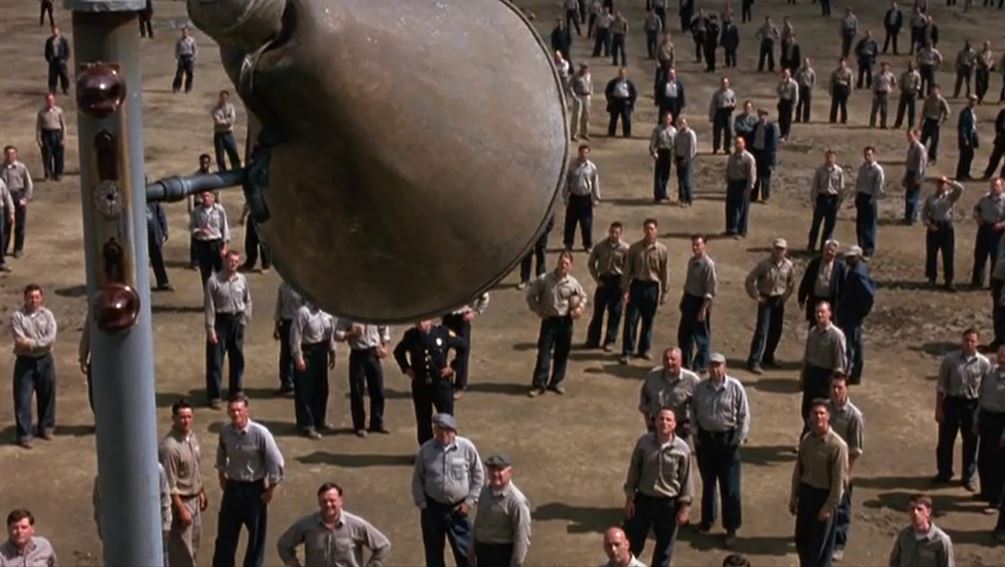
When perusing through donated items for the Shawshank library, Andy comes across a record, which he places on a turntable and broadcasts for all the prison to hear.
“Canzonatta sull’aria” from the Marriage of Figaro stops every prisoner and guard for they had never heard anything like it coming from the prison’s speakers.
The stunt landed Andy two weeks in solitary confinement, but he told his friends that it was the easiest time he ever did for he had Mozart to keep him company.
ANDY: That’s the beauty of music. They can’t get that. I mean, haven’t you ever felt that way about music?
RED: Well, I played a mean harmonica as a younger man. Lost interest in it though. Didn’t make much sense in here.
ANDY: Here’s where it makes the most sense. You need it so you don’t forget.
RED: Forget?
ANDY: Forget that there are places in the world that are not made of stone. That there’s a… There’s something inside that they can’t get to. That they can’t touch. That’s yours.
RED: What you talkin’ ‘bout?
ANDY: Hope.
Driving through a town I didn’t know, contemplating Dad’s parting word and feeling as low as the river that flowed past, I turned on the radio. Playing through the speakers was a piece so calm I felt like I should have been in a wooden church with Luke.
The “New World Symphony” was inspired by Antonín Dvořák’s time in the United States and many thought the visiting Czech lifted the second movement from an American spiritual, but it was the other way around when Dvořák’s pupil, William Arms Fisher, penned lyrics to the movement and released it as a standalone song:
Going to roam no more
Mother’s there ‘xpecting me
Father’s waiting too
Lots of folks gathered there
All the friends I knew
My sister Amy told me during her final visit, Dad talked about his parents. Perhaps he too no longer wanted to run.
FINAL TALLY
Recouping from his injuries at Albany Medical Center, David was visited by Inspector General Catherine Leahy Scott. Scott had been assigned the task to investigate how an escape from a maximum security prison could have happened. And after her investigation, she had one final question for the lone survivor.
David had a dress rehearsal the night before the escape where he timed how long it would take to leave his cell and reach the manhole cover on Cook Street.
Catherine wanted to know why David didn’t escape that night when he poked his head into the cool night air. She said David could have easily slipped across the Canadian border if he didn’t have Richard with him.
Why wait?
At the beginning of the miniseries David was on the phone with his mother, asking her if she can put in a few kind words for his parole hearing.
She hung up on him.
At that moment, Richard was David’s only family. Richard also had a plan.
Luke may have had a better relationship with his mother, but that didn’t make his life any easier. He even admits to this reality on her final visit:
Arletta, I tried. I mean to live always free and above board like you. I don’t know. I just can’t seem to find no elbow room.
For ten years at Shawshank Andy had endured unspeakable horrors. With a brief encounter with Mozart, he could again see a life outside of prison and started to carve into the wall of his prison cell with a small rock hammer, an escape attempt that would take another decade to complete.
It is unknown if Frank and the Anglin Brothers fully escaped. They did break out of their cells. They did slip a homemade rubber raft into the bay. Then….
Hitler may have not gotten his way, but for the captured POW’s the compromise was no longer a game.
In the end Luke saw no difference between a life in or out of prison and that’s why he ended up in the wooden church.
Two days after Frank and the Anglin Brothers slipped into the bay, bits of a scattered trail started to surface:
- A homemade paddle found floating in the waters of Angel Island.
- A homemade life jacket washed ashore onto Cronkhite Beach.
- Raincoat remnants found near the Golden Gate Bridge.
After the POWs were rounded up, they were interrogated, separated with a few returning to the camp they had just fled.
In the wooden church Luke gets on his knees and prays once more to God for direction, and the only response is Dragline at the door to tell Luke that the fun is over for the warden was outside.
After a seventeen-year investigation, the FBI closed their case on the first successful escape from Alcatraz. The agents believe it was possible the escapees could have reached Angel Island and taken a ferry to the mainland, but it was more likely they were swept out to sea.
After outwitting the Germans Guards at Luftwaffe Stalag III, most of the escapees had a sober reminder they were still in the middle of a war.
Given the news from Dragline, Luke had no intention of spending any more time in the box and the warden had no intention of putting him there.
With the FBI’s case closed Alcatraz Prison had to officially update its numbers:
- 39 men escaped
- 26 returned
- 7 shot and killed
- 3 drowned
- 3 got away
The final results for the Ally POWs had a similar success rate:
- 76 escaped
- 50 executed
- 23 returned
- 3 got away
Three POWs made it. That is 3 out of 600 or .005%. Not a great number, but maybe that was never the point.
When Wendy and I sat down to watch the World War II film, perhaps we didn’t fully appreciate the verb. Escape can mean to get away, but it can also be transitive. The end result may have been a bust, but the attempt, the audacity, the belief that no matter how may guards, how many stone walls, locked doors, barbed wire fences, bloodhounds, failing bodies, secured floors and eventual fates, an internal desire will never be extinguished for those who wish to be free.
Hope is a good thing, maybe the best of things, and no good thing ever dies.
This is what Andy tells Red on the eve of his escape and it has always resonated with me. I’m not the only one. Even though no one went to see it in the theater, The Shawshank Redemption found a life on video, so much so that it is currently ranked #1 on the IMDb website’s best rated films, not with critics, not with filmmakers, but with fans.
Why?
I think when we watch a movie or read a book about an escape we root for the participants for it is never really about them, but us. We are in the cells. We are behind the lock doors. We are in the tunnel. We are on the run for we know how it feels like to be imprisoned even if none of us have been behind bars. That is why our hearts swell when we see Red join his friend Andy in Zihuatanejo. That is why Hilts, marching back to the cooler, gives a surprising lift to a sober ending. That is why Frank is still out there in the middle of that transitive verb. And that is why Dad was able to break free from of all wheelchairs, secured floors and any earthly entanglements when he whispered that final word.
 fornaught.net