
SCENE FROM A CORPORATE FIRING
BOSS: Asleep? Again? That’s it! Pack your things and get out.
ALEX: Don’t do this. Don’t flippin’ do this.
BOSS: Why not?
ALEX: I’m on the edge, Mother Masher! I’m on the Clorox Bleaching edge!
BOSS: All I see is you sleeping and you can do that at home.
ALEX: Don’t push me Broccoli Breath! You don’t know what I’ll do.
BOSS: What will you do?
ALEX: I’ll quit, that’s what I’ll do. You can kiss this Baby Buddha goodbye.
BOSS: Well?
ALEX: Gold Dynamite, can’t a man finish his nap?
Sometimes to swear is to intimidate, to show some bark so you don’t have to bite. For cops it’s a warning; for criminals a dare; for teachers it may be the last arrow; for parents the final straw. At its best a well-placed swear word can stop someone from charging. At its worst it’s a red flag.
By design swear words are meant to shock. At least that’s what George Bernard Shaw had in mind when Eliza Doolittle uttered the line from his play Pygmalion: “Walk! Not bloody likely.”
Bloody, a shocking word? At the time it was, as Melissa Mohr explains in her book Holy Sh*t: “Bloody was not a terrible swear word at the moment but it still caused gasps in the Victorian crowd used to more polite language, especially from a lady.”
Recently, I watched My Fair Lady, a musical adaptation of Shaw’s original play. It was my first viewing, and I was surprised when the male lead, a professor Henry Higgins, stormed down the street only to stop after uttering the D word four times.
Musically, the swearing is on point. Literally, it may be a reference to the original Bloody. But what surprised me was the rating. Four D’s and only a G? I mean what does a nutty professor gotta spew to get an R around here?
In life you have to do a lot of things you don’t f*cking want to do. Many times, that’s what the f*ck life is… one vile f*cking task after another.
Al Swearengan
TV Show Deadwood
Besides a bark, swearing can also be a brace. Take the TV show Deadwood with an inordinate amount of swearing mixed with the language of the Victorian era:
E.B. FARNUM: Some ancient Italian maxim fits our situation, whose particulars escape me.
FRANCIS WOLCOTT: Is the gist that I’m sh*t out of luck?
E.B. FARNUM: Did they speak that way then?
The creator of the show, David Milch, did not toss in “c*cks*cker” and “hooplehead” like he was making ballpark franks. He believed the Victorian sentiments that emanated from England and took root in Boston were battered the further a person traveled west. So by the time a speculator arrived at a mining camp on the outskirts of the Dakota Territory his speech had morphed. At least that’s what Milch thought. And when asked why he added so much profanity, his response was concise, to the point and best described how he felt. He said the reason for the brutal language was people came to Deadwood for one reason alone: to rape the land.
SCENE FROM A MASERATI
DON: Guanciale! Look at my little caprino. What a bela badia!
DONNA: Talk cheesy to me you bad, bad porchetta.
DON: With an asiago like yours, it won’t take long for my fontina to turn ricotta.
DONNA: Mix your mozzarella with my mascarpone.
DON: Let me put a little capicola on my prosciutto before we pancetta.
DONNA: Bufalina me, baby!
DON: Mortadella!!!
DONNA: Gorgonzoooooolaaaaaa!!!
The Italians are not the only ones to spice things up when it comes to amorous congress. The French, especially the explorers, were prone to lusty descriptions after spending months if not years without the comforts of home. And when they traversed the vast landscapes of the new world, they made do with their environment by seeing shapely figures in passing clouds, lush fields and sloping hills. After all, how else do you explain The Grand Tetons, which is French for exactly what you think it is?
SCENE FROM YE OL’ PUB
TOM: If it isn’t the original buffe nabber.
BOB: Milk the pigeon you napper of naps.
TOM: Buy your ol’ pal a pint?
BOB: You’re already corned.
TOM: Not for me. [Points to a lass at the end of the bar]
BOB: You? Her? Riding St. George?
TOM: About time the tickle tail found some tuzzy muzzy.
BOB: What about the lawful blanket?
TOM: No marriage music for her. Box the Jesuit, she tells me.
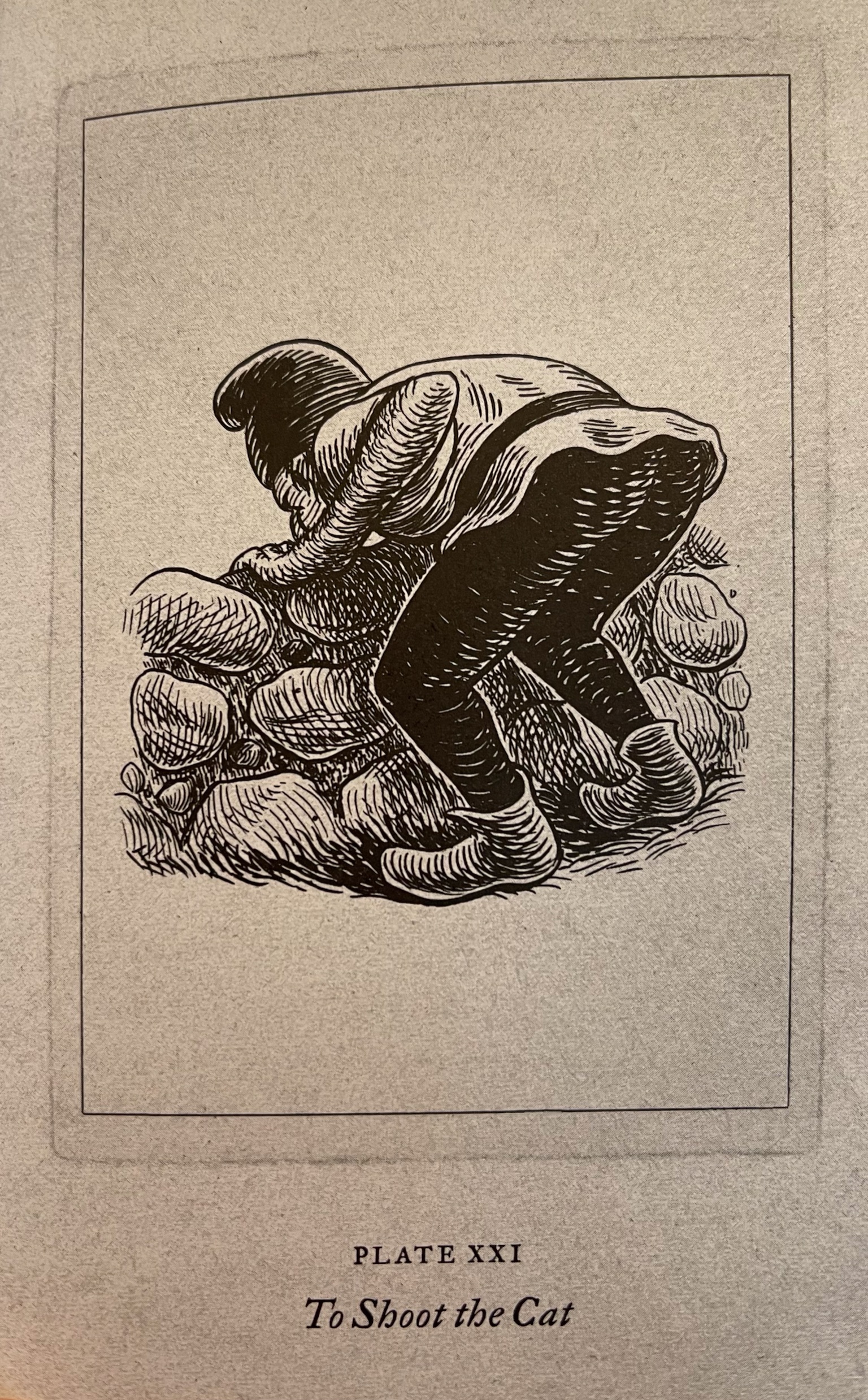
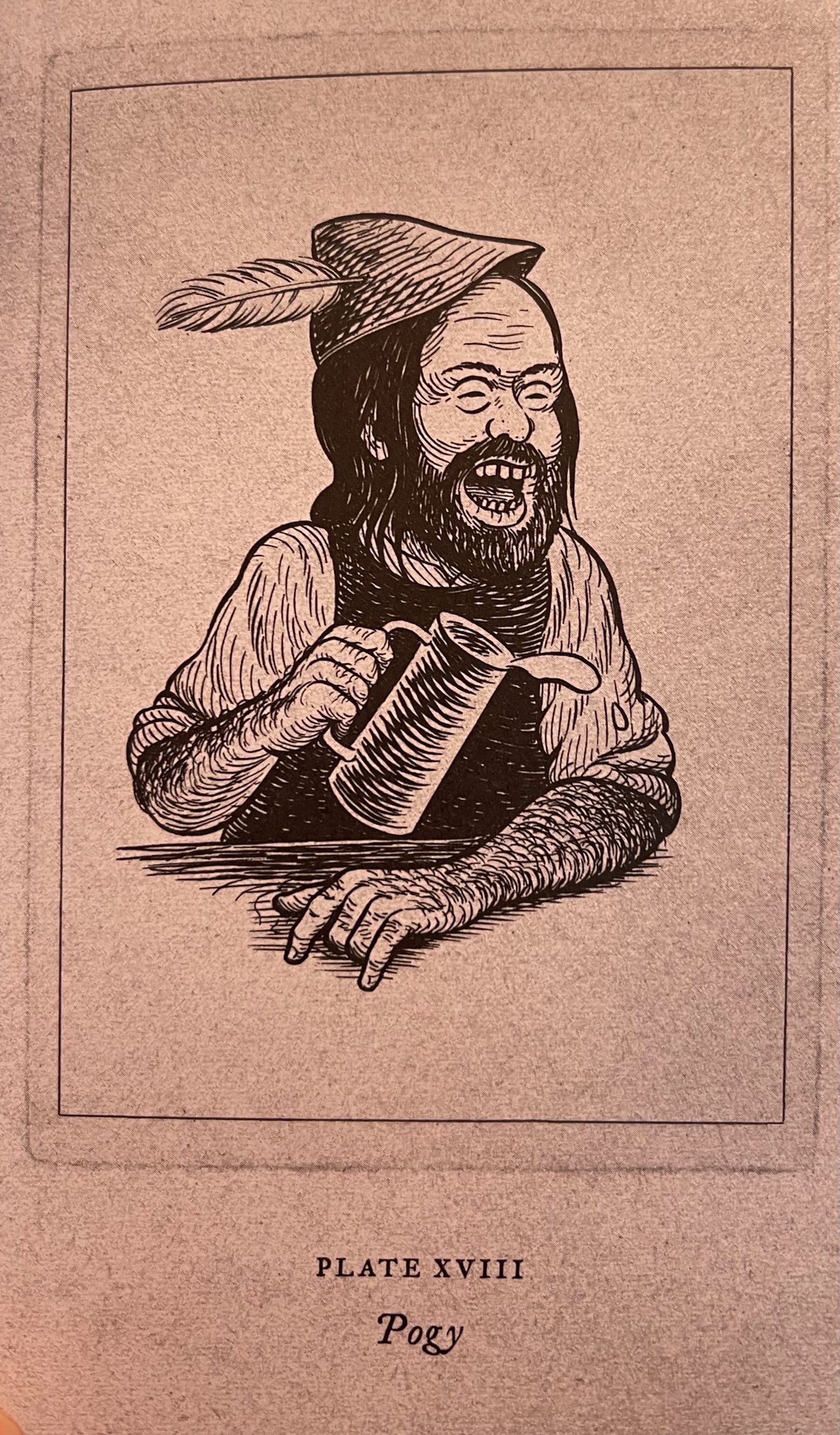
BOB: Well, Admiral of the Narrow Seas, why don’t you just shoot the cat and toddle on home. I see no buttock ball for a pogy like you.
Most swear words revolve around the most basic of human functions. And over the years a lot of these functions were covered over with euphemisms, which is to talk about a thing without talking about the thing. For example, when you needed to use the lavatory at my school, you were either going to do a Number One or a Number Two. My mom referred to the Number Two as a bowel movement or BM aka referencing what the alimentary tract does in the final stages. What was never mentioned is the product being moved.
In Roman and Medieval times there was no concern for such delicacy for everyone peed, pooped and poked in front of everyone else. It was indoor plumbing in private homes that changed the dynamic. With more privacy came a greater amount of delicacy. And with more delicacy came the need to refer to the thing without mentioning the thing. But how? Well, one could use the Latin root.
Micturate: to pee
Defecate: to have a BM
Expectorate: to spit
Perspire: to sweat
Yes, the Victorian Era was a time when a lady couldn’t sweat. She could not hock a loogie. Also, one was never to mention the words “leg” or “trousers” in her presence for they were too close to the male nether region. And for those who were not comfortable with the archaic and clinical words found in a dead language, there was always the French tongue. After all, one should never say underwear with lingerie (laundry) available. But be advised that if you use the commode in Avignon, you will be depositing your Number Two into a chest of drawers. And if you need to use a toilet in Marseilles, please know you will be touching up your makeup, which makes the following Merriam-Webster entry unintentionally hilarious.
Toilet – verb (ex) the princess required at least a dozen maids to toilet her for formal occasions
SCENE FROM A TRIAL
BAILIFF: Do you solemnly swear that the testimony you are about to give is the truth, the whole truth, and nothing but the truth?
WITNESS: D*mn Straight!
BAILIFF: And can you so swear without swearing?
WITNESS: Why would I do that?
DEFENSE: Mistrial!
When did swearing become so serious? Once again we can go back to the bible when Yahweh was competing for shelf space. Swearing an oath was one way to get people off paganism. With multiple gods, one could play the field with the likes of Nibhaz and Baal-Zebub. No long-term commitments. Heck, maybe no second date if Minerva keeps showing up at your favorite bar. But monotheism? That’s a sixty-year marriage. Making a compact with Yahweh was to take an oath that held consequences. For if you were to backslide with Venus, Yahweh would punish you directly by withering your crops, striking with pestilence or worse, revoking your parking privileges. This was a direct and impactful relationship with the divine. It was so serious that swearing an oath and staying faithful to that oath are the top three Ten Commandments:
I. Thou Shall have no other gods before me. Not on the side, not around the corner, and never waiting at a Days Inn at three in the afternoon.
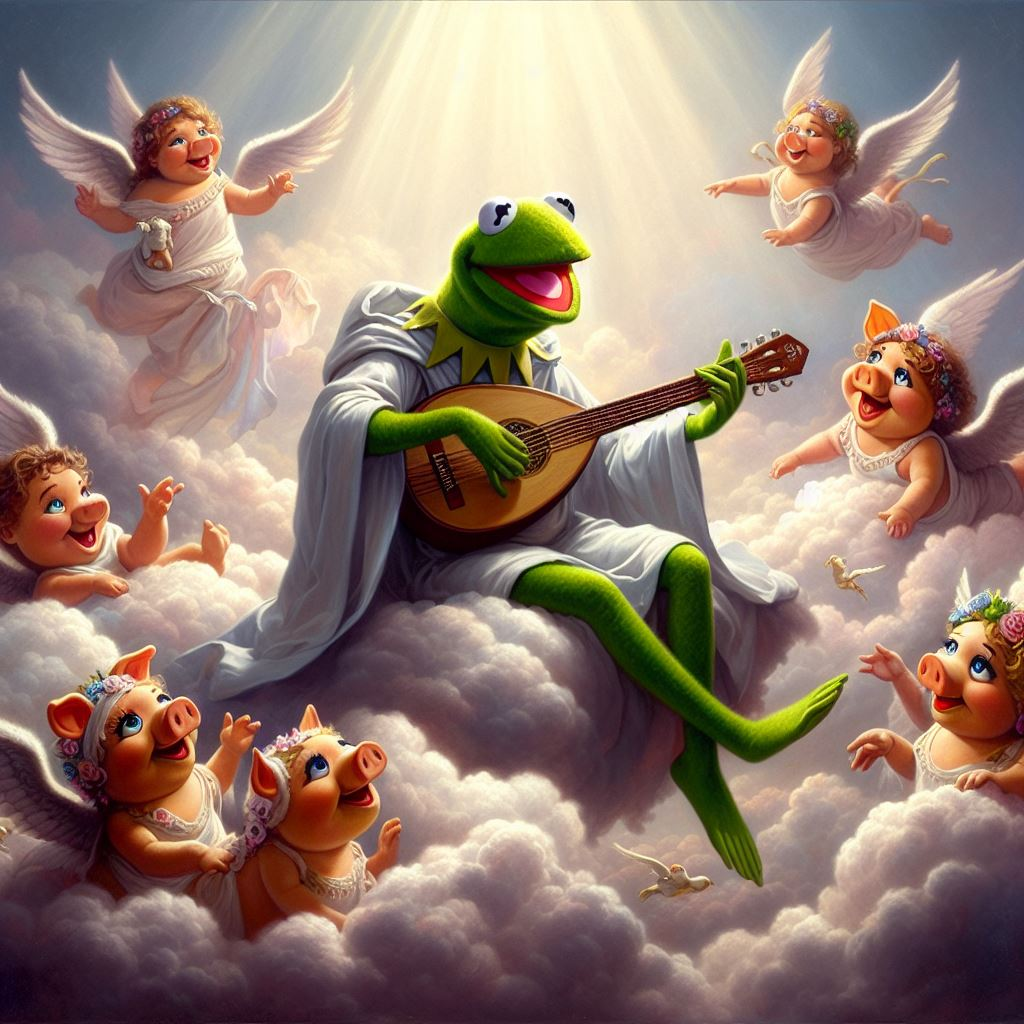
II. Thou shall not worship false idols. No golden calves, no blue oxen, and absolutely no green frogs that date pink pigs.
III. Thou shall not take the name of the Lord in vain. Don’t play me. I’ll know. Oh, I’ll know.
Yes, swearing an oath to the one and only was a serious affair. So much so there was a belief that those who swore on God’s bones would in fact break those bones if they were to go back on their word. But over time those who slipped soon discovered something: No pestilence. No parking restrictions. Besides, what kind of belief system lets some pogy put a god in traction? So over time oaths started to lose their impact and turn into swear words that soon became minced and mild.
SCENE FROM A 1950’S HOUSEHOLD
FATHER: Son, you are probably wondering why your mother sent you to your room.
SON: Gosh Darn, I don’t know.
FATHER: It’s your language. Lately, it’s become salty.
SON: Golly!
FATHER: You see, words like that might be fine hanging out at the pool hall. But here… Son, we are not Russian sailors.
SON: Jeez, Dad! This is nuts!
FATHER: Taking the Lord’s son’s name in vain while referring to your nether region will not get you out of this room any sooner.
SON: Jiminy Cricket!
FATHER: If you continue this screed, you might as well pack a knapsack and head to the train depot.
SON: Tarnation!
FATHER: I don’t even know who I’m talking to anymore.
Growing up I never had a direct moment with God. I do remember lectures from Dad about the bright, clear line that separated us Catholics from the rest of the Christians. After all, the Baptists, Lutherans and Methodists believed the bread and wine served at communion were symbols of Jesus Christ’s body and blood. The Catholics, on the other hand, believed that through the sacred rite of the Eucharist the bread and the wine turned into the actual body and blood of Jesus Christ, literally, which from a biological point-of-view made Catholics cannibals, I think. Actually, I didn’t give it much thought for I was ten years-old and Pac Man and Donkey Kong were my eight-bit false gods. But I do remember one incident when the bread and wine felt more impactful.
There was this kid at school. Frank was his name. He was a grade behind me, but he looked like a grown adult. He must have been held back ten years for he was immense with a Cro-Magnon forehead and recessed eyes. His constitution set him on a career path of either working as a bouncer at a seedy nightclub or a curator at a fine arts studio.
The reason I bring up Frank is because it was time to set aside our studies and celebrate a weekly mass. And when it came time for communion, I did what every Catholic boy does: lose all sensation in my lower extremities while kneeling on a wooden plank. And as I kneeled, I watched my female classmates in plaid skirts walk to the altar. But there was Frank about to receive communion.
It was an odd scene for he didn’t receive the body of Christ like a normal human with one hand underneath the other. Instead, he extended his left and kept the right by his side. So the priest placed the host on Frank’s left paw and Frank popped the host into his mouth like it was a tic tac. He then slipped the dry wafer between his upper and lower left molars and cracked it in half.
God’s Bones! I can still hear the echoing through the stone cathedral. If that wafer was the body of Jesus Christ, Frank had just body-slammed Him.
SCENE FROM A BOWLING MOVIE
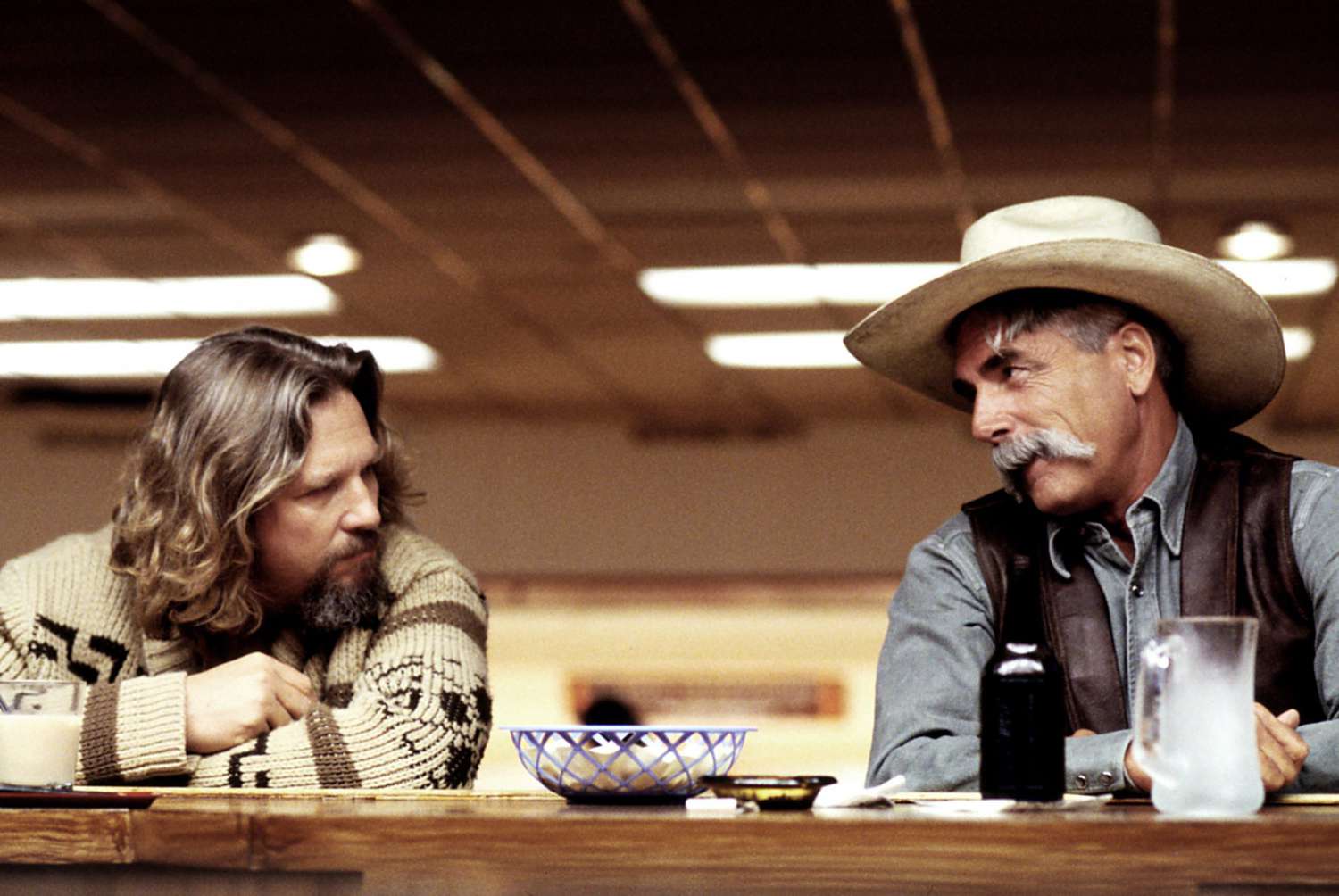
COWBOY: I like your style dude.
DUDE: Oh, well I dig your style, too, man. Got a whole cowboy thing going.
COWBOY: Thank you. There’s just one thing, Dude.
DUDE: What’s that?
COWBOY: Do you have to use so many cuss words?
DUDE: What the f*ck you talking about?
COWBOY: Okay, Dude. Have it your way.
One night Stephen Colbert interviewed Kacey Musgraves. She came out, sat by his desk and the country singer from Golden, Texas started to drop F-bombs.
It was an odd scene for Musgraves wasn’t an auto mechanic telling Colbert he needed a new muffler. It was supposed to be a pleasant conversation about her new album, and yet, the profanity.
I put it on nerves, a year-long lockdown, being in front of a live audience. But a week later I read a Guardian interview with Musgraves.
More F-bombs.
Maybe with Musgraves this was normal talk, Tuesday morning banter, not meant to intimidate, intensify or arouse, but just there.
Was it all Jon Stewart’s fault? Before Stewart (B.S.) there was a clear demarcation for the viewing masses. TV had the Federal Communication Commission (FCC). Movies had the Motion Picture Association of America (MPAA). Both were scolds and quite good at regulating profanity. But then cable arrived and became a non-regulated Eden. This was the garden Jon Stewart frolicked in when he took over The Daily Show. His charge was to cover the news and make it entertaining. And being a NYC comic, he worked in his stand-up delivery which involved a whole lot of swearing.
First, it was hilarious for it liberated Stewart, especially when he went after Donald Trump for eating a slice of NYC style pizza with a fork. But you can only report the news with so much profanity before the profanity loses its punch. And as Stewart delivered the news for sixteen years it seemed that he went through seven stages:
1. Shock: Profanity + News = Must see TV
2. Funny: Tell us how you really feel about Dick Cheney.
3. Exasperated: What? We have to do another show?
4. Harried: Gulf War not so entertaining.
5. Frustrated: Bush got a second term?
6. Beleaguered: Hurricane Katrina.
7. Burnt out: I’m f-ing done!
And so Stewart stepped down and moved to a farm in New Jersey. And what was once fun and new became part of the routine. Granted, funny was still funny. But the paradigm had shifted. Profanity was now baked in as swear words even increased 69% on broadcast TV over the past five years. Even more, Nate Bargatze is continually asked why he doesn’t swear as if the question implies that he is doing something wrong, as if he is the new outlier.
SCENE AT A NEIGHBOR’S FENCE
DEAN: Hey Stan how goes it?
STAN: Sheeeeee…
DEAN: The wife?
STAN: Helllllllll….
DEAN: Kids?
STAN: Fuuuuuuuuuuuu….
DEAN: Your dog?
STAN: Arthritis I’m afraid. The old gal’s last days are nigh. The tick, tock, tick waits for no pheasant opener.
Through the rolling waves of time, my parents reached their 25th wedding anniversary. We planned a surprise. We hatched a scheme to send them out for Sunday brunch and slip family and friends in for an impromptu celebration at their home.
It was a success. There was even cake, which gave Mom the opportunity to shove a slice into Dad’s mouth, giving me a vivid flashback of that Ivory bar of soap. And when the day drew to a close and the guests began to filter to home, a few of us remained. We sat in the living room in chairs, the sofa, some sprawled on the floor. Mom sat in her recliner, basking in the moment, but her smile soon revealed a deep yawn.
It had been a long day. The sun had set and Mom wanted to go to bed. So she stood up to wish everyone a fond farewell.
After many conversations, Mom told us she planned to say in the most Shakespearean tradition: “The bewitching hour is nigh.” But it had been a long day and she was tired. So she only managed the first word, the word with the “e” the “w” and the “-i.n.g.” removed.
 fornaught.net