I had yet to use the outdoor commode. I’m pretty regular, usually having the number two around six in the evening, which is a fitting comment to the end of a work day. But so far two five o’clock whistles and no movement.
I wasn’t worried. It wasn’t like the poop was going anywhere. It would happen sooner or later for the past couple of days I had been eating like I was on a Norwegian cruise.
“I never thought I’d have surf and turf in the Boundary Waters,” I said, complimenting Dave on the filet mignon and smallmouth bass. “When’s taco night?”
“Tomorrow.”
I was kidding. Dave was not. There were tortillas, beans and rice in the cooler.
One of the best parts of this trip – besides almost knocking myself out and nearly drowning – was hanging around the campfire. After dinner, we passed around a thermos of Scotch, getting to know each other.
Besides being our provider of fresh fish, John worked as an administrator at the University of Iowa. Besides building canoes, Dave owned rental property and a small construction firm. Besides being wilderpedia, Don ran a small organic farm for a private foundation. And besides being my brother, Chad worked in the dental division of a company that got its start on the North Shore.
The scotch went around and we ventured into work, politics and since we were all middle aged, finances. And as we talked it became apparent that we all came to this campfire from different directions with varied beliefs. John even made the observation that some of our beliefs didn’t necessarily coincide with our current work, which only goes to prove my long-held belief that life gets complicated when you try to live it.
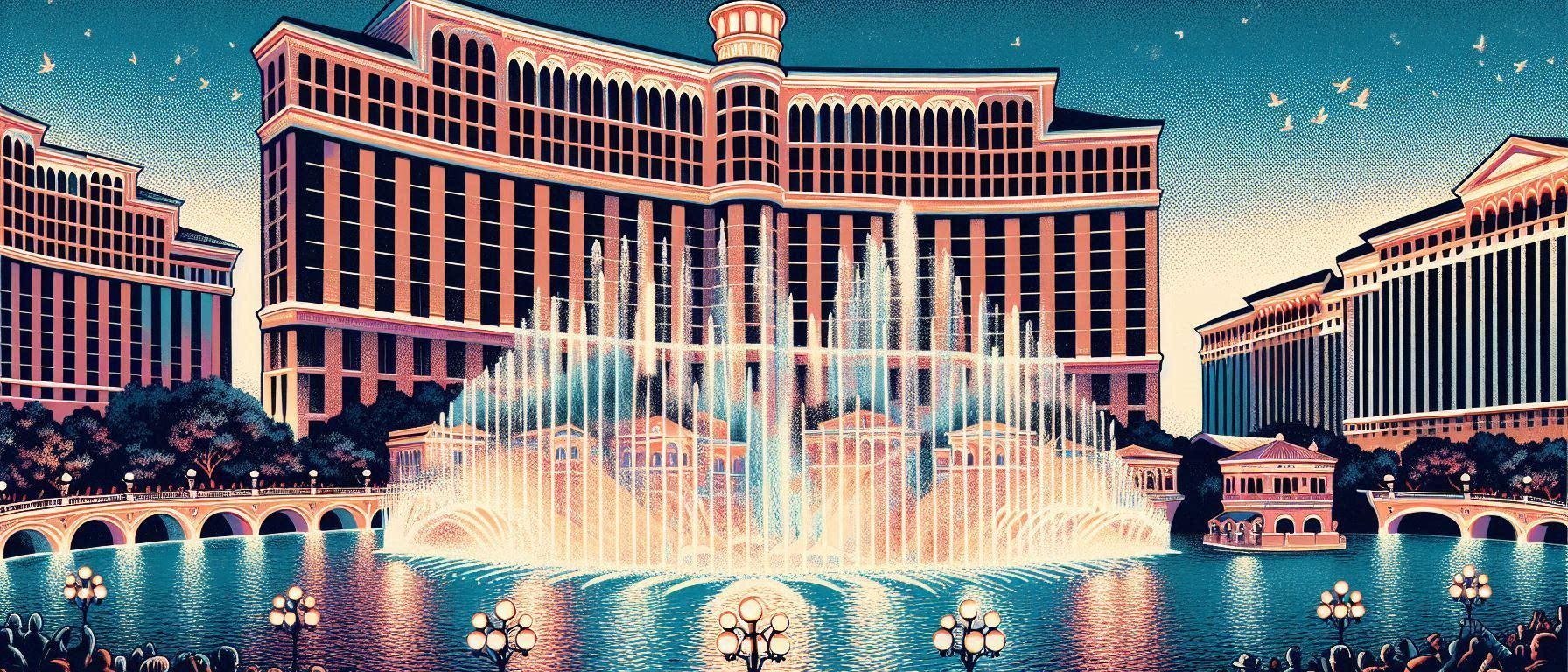
The sun began to set, the campfire glowed and a full moon began to appear. John and Dave headed to the shore to try a little night fishing. Chad took the single canoe onto the lake. I remained and peppered Don with more nature questions while watching the campfire, the flames as memorizing as the fountains in front of the Bellagio…
Out of the ashes of the Dunes not only sprung a five-diamond casino hotel but also an eight-acre pool. The Bellagio did not build this pool for swimming but to house the biggest, most complex, possibly the greatest fountain ever built.
The word immense doesn’t come close to describing the fountain. Seventy-five million dollars went into the project, a spectacle Steven Wynn envisioned to draw gamblers to Las Vegas. And did the crowds gather. I could see their tiny heads dotted along the perimeter, flashes from cameras sparking the night like fireflies.
Then music.
I didn’t recognize the song, but it had the melancholy sadness of a slow-moving waltz, pensive, longing, which caused the water to bend and lean like a forlorn, languid ballerina.
Later in the evening Ron and I would attend The Cirque du Soleil’s “O” an aquatic production of romance, artistry and European surrealism. (So said the program.) Opulent and sumptuous, it would be a visual feast of cultures gathering to create the world’s greatest pool party. But no matter how amazing the prowess of the performers and stunning the aquatic feats, I couldn’t help returning to the fountain outside with water moving like I had never seen water move before…
It was the one and only time it rained on my three vacations.
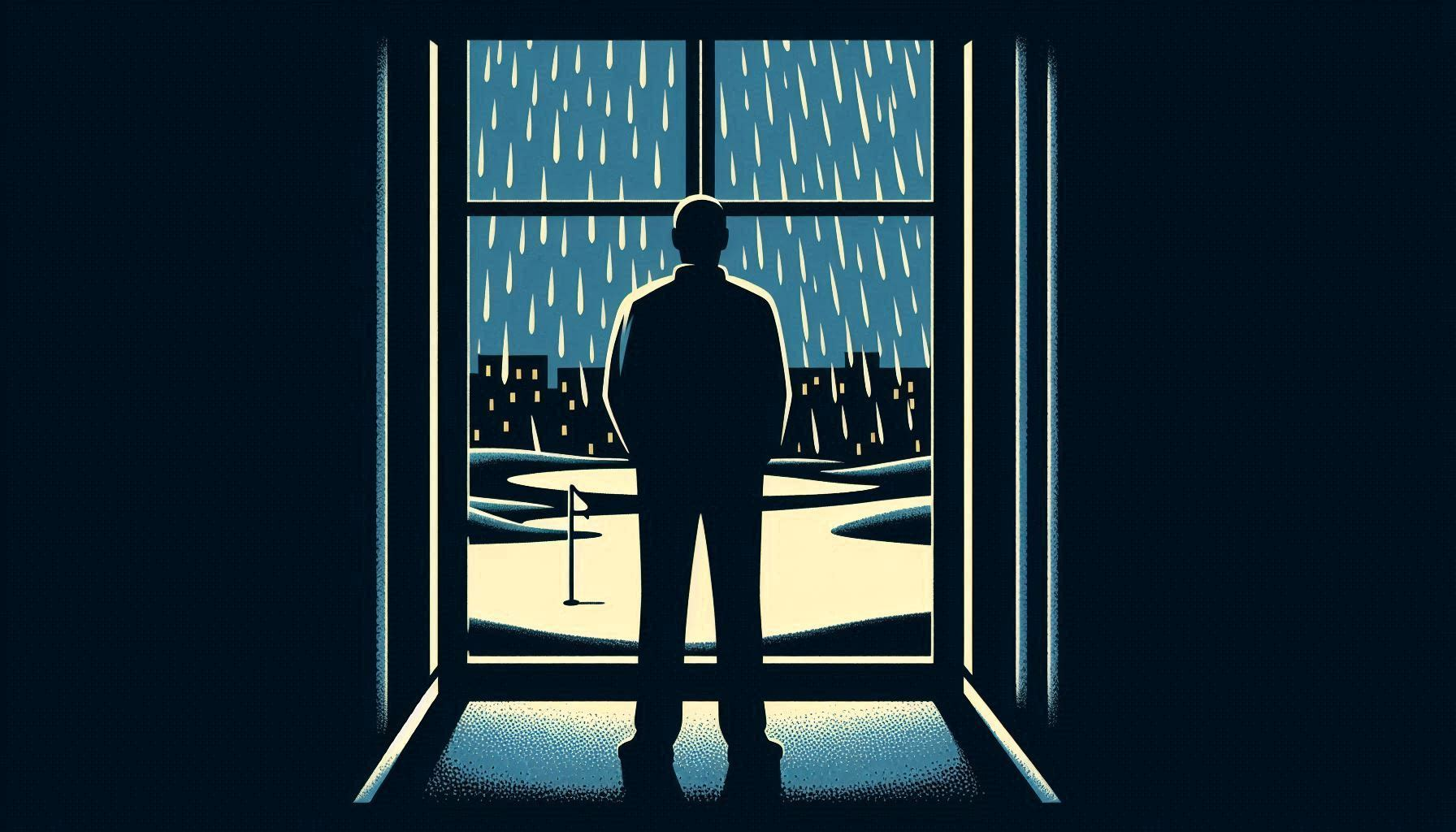
I moved closer to the window at Black Bear Casino. The mega-watt lights from the hotel poured onto the adjacent golf course, turning night into day as the rain filled the 18th hole.
I leaned my head against the glass and an odd sensation overcame me. I had seen my share of rain, but it was at ground level. But this was different. Here, rain streamed by and kept going.
“This is cool,” I said.
“What’s cool,” Vu asked.
“The rain.”
“What’s cool about rain,” Quynh asked.
“I don’t know.”
Vu didn’t budge from his computer. Quynh came to the window. She looked, shrugged and went back to the TV. Neither were impressed. It reminded me of the time when I came back from a vacation in the Black Hills and a group of friends asked, “How was it?”
“Awesome,” I replied. “I saw an owl.”
“So?”
“So, it was an owl.”
No one was in awe of the statement. In fact, it only started a game of one-upmanship:
“Owl? I saw two last week.”
“Saw? I have one living in a tree in my backyard.”
“Backyard? I have one living in my house. It pays rent.”
Maybe I needed to be less enthusiastic about simple things. After all, aliens landing in the parking lot to play Keno is news. Watching rain do something it’s been doing for millions of years. The only thing different was my perspective. All these years looking up, I could now pick one drop and follow it to the ground, its descent as endless as an elevator descending into the center of the earth…
I didn’t think I would need to wear a hard hat while on vacation as I stood in a steel cage that rattled and shook. I tried not to bump into others, but it was difficult for we were crammed together like commuters in a Tokyo subway car.
When you enter an elevator it is usually to go up. But we were doing the exact opposite, being lowered a half mile into the earth. Why? I somehow convinced Quynh and Vu that it would be fun to tour a retired mine.
In the 1800’s prospectors came to this region looking for what all prospectors hope to find: a working ATM. What they found instead was the biggest iron ore deposit in the world. The problem: the iron ore clung to prehistoric rock, and the rock was not marbled fat to be cleaved from iron-rich meat. It was solid, tough and unwilling to let go. There was no way around it. Mining would involve back-breaking work.
The first few years were a free-for-all as miners clawed, hacked and shoveled what iron ore they could dig in a single day. Eventually a Pennsylvania attorney with the luxurious name of Charlemagne Tower purchased the rights to the land, and by 1882 he built a railroad track and brought in Cornish miners.
Even with a little order, open pit mining was still a brutal exercise. Working in teams of three, the Cornish miners chipped into unforgiving rock with picks and hammers and dynamite. In the summer, with the humidity and mosquitoes, mining was a miserable pursuit. But in the middle of January it was even worse. In fact, the name of the site came from one of the superintendents who in a fit of hypothermia joked, “I do believe the winters here are much like the ones I experienced working in Sudan, Africa.”
Still the work continued. By 1900 the open pit became too dangerous and moved underground. By 1912 the mine reached 1,250 feet. By 1962 the mine closed at 2,341. By 2010 our tour group had reached the 27th level.
As we stepped out of the steel cage, I found the cool temperature a pleasant reprieve to the unseasonably warm day. The mine was also drier than any finished basements as fresh air from the surface constantly circulated through the tunnels.
My first impression of being a half mile underground was favorable.
When it was in operation, the Soudan Mine had a stellar safety record and a reputation for being a good place to work, earning the slogan, “The Cadillac of Mines.” I was glad we weren’t touring the Ford Pinto version as we loaded into carts that would take us down a mile long track.
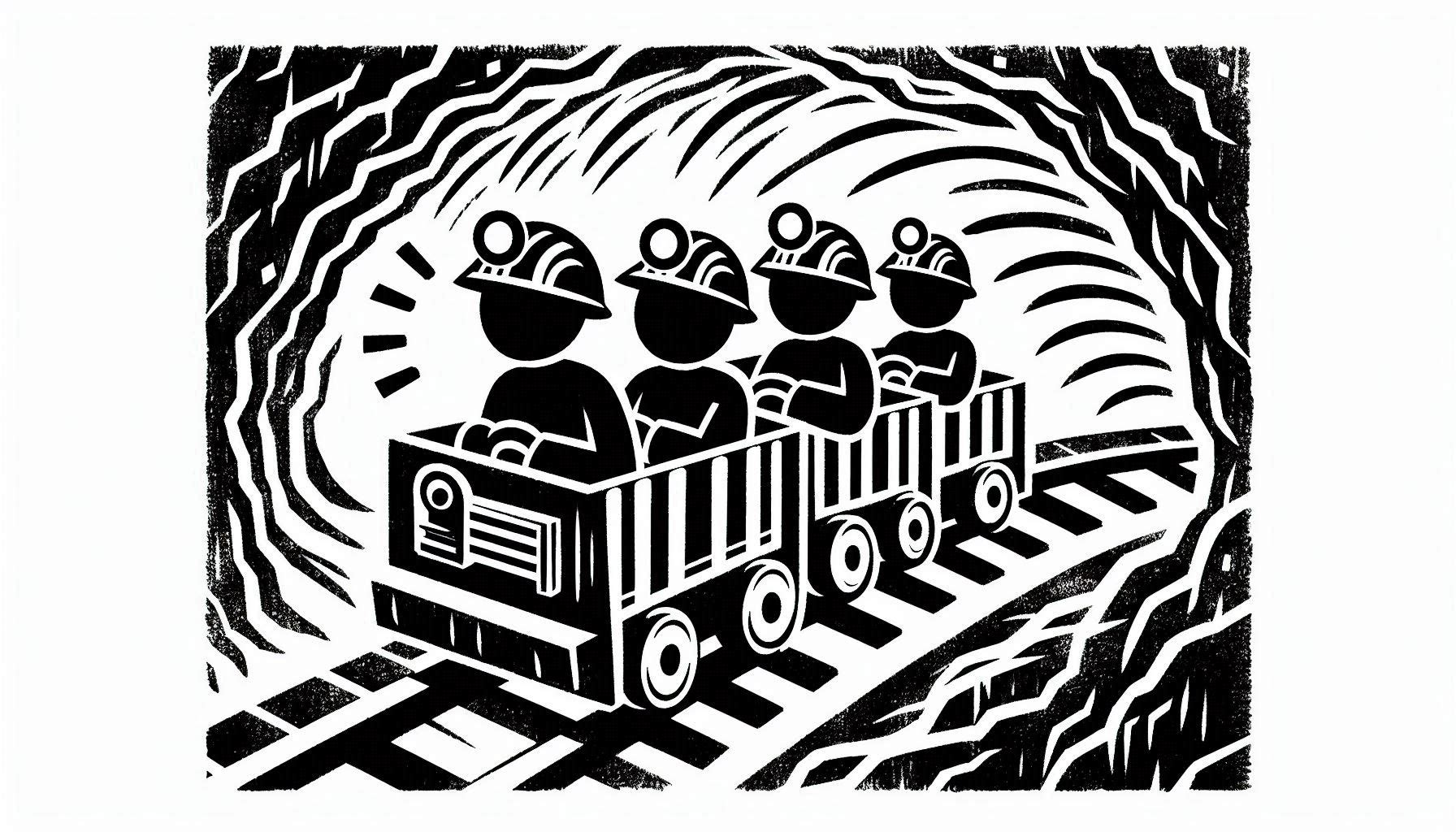
If you are a person that needs spectacle in a vacation do not tour a mine. After a ten-minute train ride, we came to a room that reminded me of a grotto, its expanse as cavernous as a hotel-casino lobby. Being underground didn’t feel claustrophobic. But there wasn’t anything to see. No root beer stand. No slot machines. Just an open room lined with prehistoric rock. It was nothing like our tour the day before….
It is my belief that every vacation should involve visiting at least one mansion, whether touring the White House or sneaking into Bill Gates’ Puget Sound estate. It’s always fun to see how the other half of the other half of the other half of the other half lives. That’s why Vu, Quynh and I were at the front door of Glensheen Mansion.
Set on a twenty-two-acre estate, overlooking Lake Superior, Glensheen has formal gardens, a meandering creek, a gardener’s cottage, a boat house, a horse stable and proper mansion designed by architect Clarence H. Johnston Sr., who although trained in the Beaux Arts, harkened to the earlier Jacobean Revival with jutting columns and open laced parapets. (So said the pamphlet.)
When our group stepped into the foyer, I was surprised how welcoming it felt. I had seen my share of extravagance, but this was the first time a mansion put me at ease. The imposing exterior did not enter the front door. It wasn’t by mistake. The owner, with the mineral-enriched name of Chester Adgate Congdon, built the mansion not to look like a place to catch a train or open a bank account but to raise a family. And with 38 rooms covering 27,000 square feet, there was plenty of room for everyone.
As we moved from the library to the conservatory collecting candlesticks and rope, I was surprised to not only find the rooms in their original condition, but also holding many of the original furnishings. It was a refreshing change from previous tours that included Hart Island on the St. Lawrence Seaway with its half-completed castle and the James J. Hill House in St. Paul, Minnesota that was as vacant as a dotcom company after liquidation.
As we stood in the formal dining room, it became apparent that Mr. Congdon did not spare much expense. Why would he? At the time he was building his mansion (circa 1905-1908) Duluth had more millionaires per capita than any other place in the nation. Mr. Congdon certainly had to one-up his neighbors by starting with a foundation of poured concrete and steel for he had a wife who had an irrational fear of earthquakes. Then he installed indoor plumbing with heated water, an intercom setup connected to each room, track lighting for the hallways and an internal vacuum system.
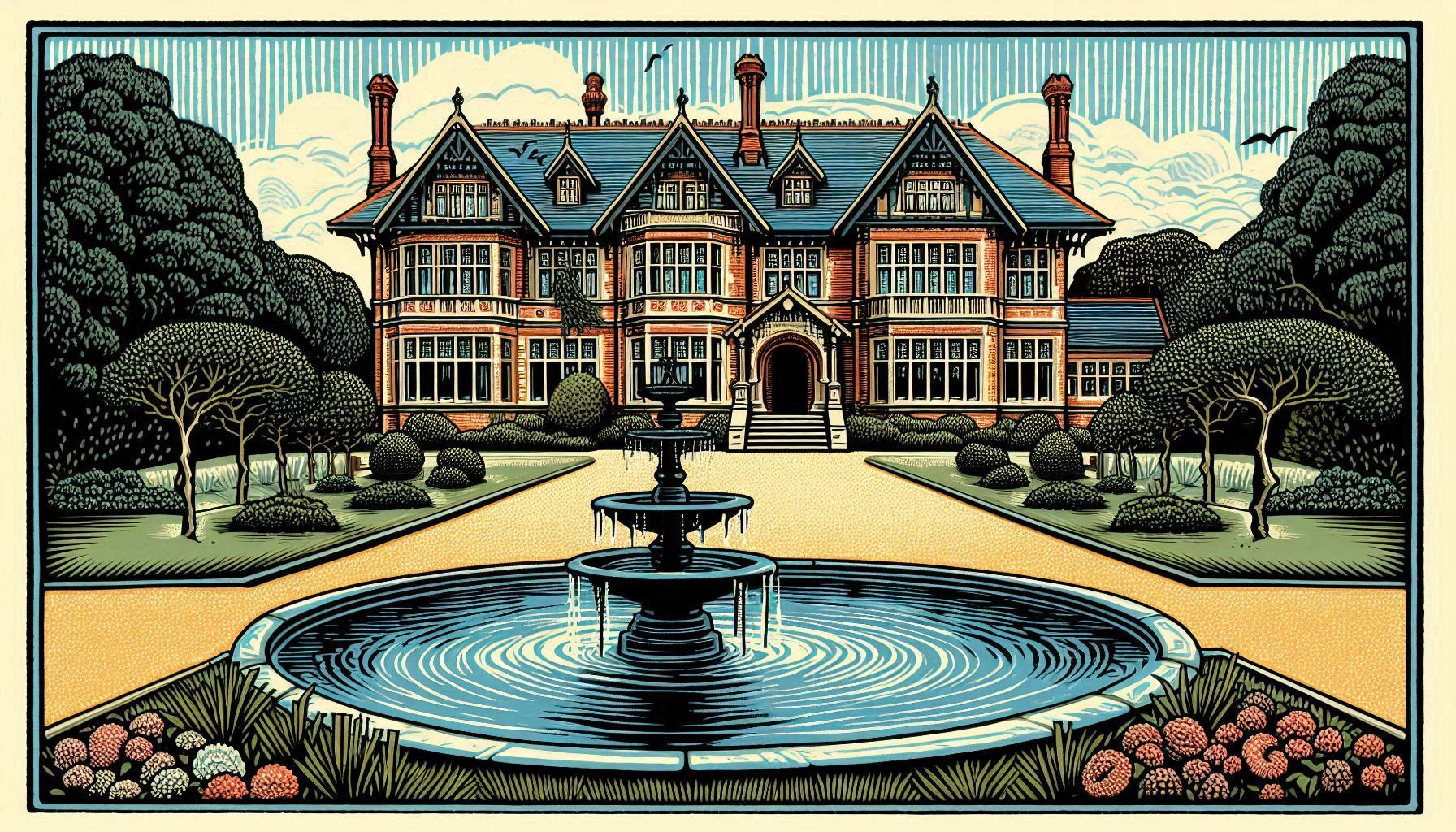
Mr. Congdon made his fortune in mining and the iron ore he was sending on ships were returning goods to Glensheen in the forms of marble fountains, rare first edition books, exquisite china, gold leafed ceilings, imported Italian tiles, hand-carved wood and plenty of antiquity. It was an arrangement between the mansion and the mine where the mansion took everything.
With stringy white hair shooting from his red hard hat, our tour guide looked like a retired miner. In fact, he was. He worked the open pits at Mesabi, and his current assignment seemed less like a paycheck and more of a calling.
For most of my vacation I had picked up brochures and watched PowerPoint presentations, but this was my first chance to hear a tale.
Back when the levels of the Soudan Mine were still in the single digits, there was no such thing as a union and hourly wage. Miners put in long hours for they were paid by the ton. But first they had to get there. The mile long trek we took by train had to be done on foot. Sometimes it took over an hour to enter the elevator and reach the site and it didn’t help that the commute was in the dark.
Unlike Glensheen, the Soudan Mine wasn’t wired for electricity. The miners had to bring their own light, which was a candle mounted on a hard hat. It didn’t take long for the hot wax to mingle with the sweat and dust, stinging the eyes.
And on top of not being able to see was the inability to hear.
If you ever walk into a recording studio or concert hall, you will notice they are not in a cave. Solid rock does not absorb sound but throws it right back at the source, which isn’t ideal when swinging hammers and setting off dynamite.
Maybe it didn’t matter if the miner could not hear his co-worker for the person working next to him probably didn’t even speak his language.
We were told that when waves of immigrants flooded the mines, the superintendents split up the ethnicities. They formed teams not to create cultural harmony but to keep the miners from talking to each other. After all, one person complaining is grumbling. One person complaining to another is the seed that leads to something.
Mining at the turn of the century was god-awful and yet men lowered themselves into the earth. Why? What were their options? It’s not like an Irish immigrant was going to take one look at the mine and say, “Feck this! I’m off to IBM.” There were few, if any, opportunities. So they went into the mines, and it was their sacrifice we should all give thanks for it was iron ore that helped build America, whether skyscrapers, bridges, automobiles or the planes that really scrape the sky.
CODA
As our car broke from the winding curves of the Superior National Forest, Vu, Quynh and I began the long descent to Lake Superior.
Even though I barely had my foot on the pedal, the car was climbing close to ninety m.p.h. The speed didn’t matter for the road was as straight and smoother than any of the trails we earlier hiked. In fact, we were on the ultimate sledding hill, cruising down a slope of prehistoric lava, heading to the North Shore, heading home.
Two weeks. Three vacations. Six friends. A unique experience and I enjoyed every moment. And yes, I did use the outdoor commode. It was on the final day. As the rest of the guys started to pack, I slipped away with nary a magazine, marble shower or golden bidet. At that moment it did not matter what I didn’t have as the sun filtered through the needles of the still pine trees. After all, how much luxury does one man need?
 fornaught.net